
Damage Restoration After Severe Weather Events
Storm Damage Repair in Clayton for wind-lifted shingles, hail impact, and structural compromise from heavy rain
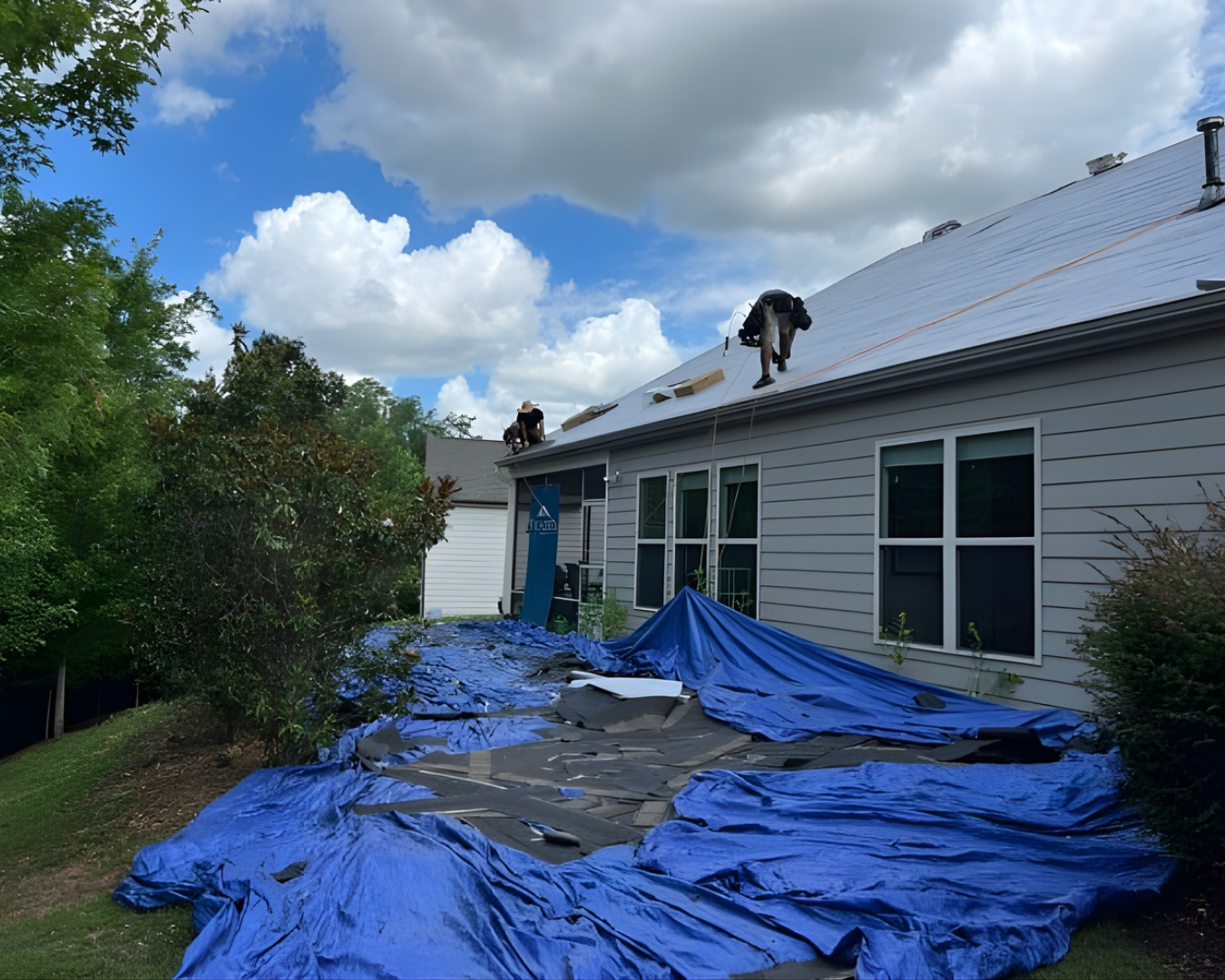
Peak Roofing Solution LLC responds to storm-damaged roofs throughout Clayton with emergency repairs and comprehensive restoration services. North Carolina experiences hurricane-force winds, large hail, and torrential rainfall that tears shingles loose, cracks flashing, and drives water through compromised barriers into attic spaces and wall cavities. Quick response reduces further exposure by securing damaged areas with temporary protection while permanent repairs proceed through insurance claim processes.
Storm damage assessment identifies wind patterns that lift shingle edges on specific roof planes, hail impact points that fracture shingle surfaces and bruise underlying materials, and water intrusion paths created when debris punctures roof membranes. Local storm patterns include rotational winds during tropical systems that damage south and east-facing slopes, spring hail events that concentrate damage on higher roof elevations, and ice dam formation during rare winter freezes that forces water under shingle layers.
Schedule a post-storm evaluation to document all damage while evidence remains fresh for insurance documentation.
What Changes After Storm Restoration Completes
Storm repairs involve replacing entire sections of damaged shingles rather than isolated patches, upgrading flashing systems that failed during wind events, and reinforcing vulnerable areas like ridge caps and valley installations that commonly suffer repeated damage. The work includes removing debris embedded in roof surfaces, extracting water-saturated underlayment, and replacing any decking sections compromised by prolonged moisture exposure before permanent weather barriers install.
Once restoration finishes, your roof regains its original wind resistance rating through proper fastener patterns and seal adhesion, water flows correctly through valleys and off eaves without backup or pooling, and interior spaces remain dry during subsequent weather events. Peak Roofing Solution LLC coordinates directly with insurance adjusters during site visits, providing technical documentation that clarifies damage extent and necessary repair scope for accurate claim processing.
The service includes photographing damage before repairs begin, itemizing all replaced materials for insurance records, and verifying that restoration work meets manufacturer installation requirements to maintain warranty coverage. Emergency tarping prevents ongoing water damage when weather conditions or material availability delays permanent repairs. Some storm damage remains invisible until professional inspection reveals fractured shingle tabs, loosened fasteners, or compromised underlayment that will fail during future weather exposure.
What Property Owners Usually Ask
Homeowners dealing with storm damage need clear guidance on response timing and insurance coordination.
What qualifies as storm damage versus normal wear for insurance purposes?
Storm damage shows sudden onset from specific weather events with visible impact points, uniform damage patterns across exposed roof areas, and supporting evidence like nearby property damage or documented severe weather in your location on specific dates.
How quickly should I address storm damage after severe weather?
Immediate temporary protection within twenty-four to forty-eight hours prevents secondary water damage, while permanent repairs should begin within two weeks to maintain insurance claim validity and prevent further deterioration from continued exposure.
What documentation do insurance adjusters need to approve storm claims?
Adjusters require professional inspection reports with dated photographs showing damage extent, repair estimates from licensed contractors, evidence linking damage to specific weather events, and documentation that the roof was properly maintained before the storm occurred.
How does hail damage differ from wind damage on roofing materials?
Hail creates circular impact craters with exposed underlying material and fractured granule surfaces, while wind damage produces torn shingle edges, lifted tabs with broken seal strips, and missing sections concentrated on roof slopes facing prevailing storm direction.
Why does Clayton experience specific storm damage patterns?
The area's position relative to coastal hurricane tracks creates strong rotational winds from tropical systems, while spring severe weather brings large hail and straight-line winds that damage exposed roof elevations differently than winter ice accumulation affects low-slope sections with inadequate drainage.
Peak Roofing Solution LLC assists with emergency response, damage documentation, and claim coordination to reduce stress during the restoration process. Contact us immediately after storm events to secure your property and begin the assessment process while damage evidence remains clearly visible.