
Drainage Systems That Protect Your Foundation
Gutters in Clayton for homes with water pooling and erosion around the foundation
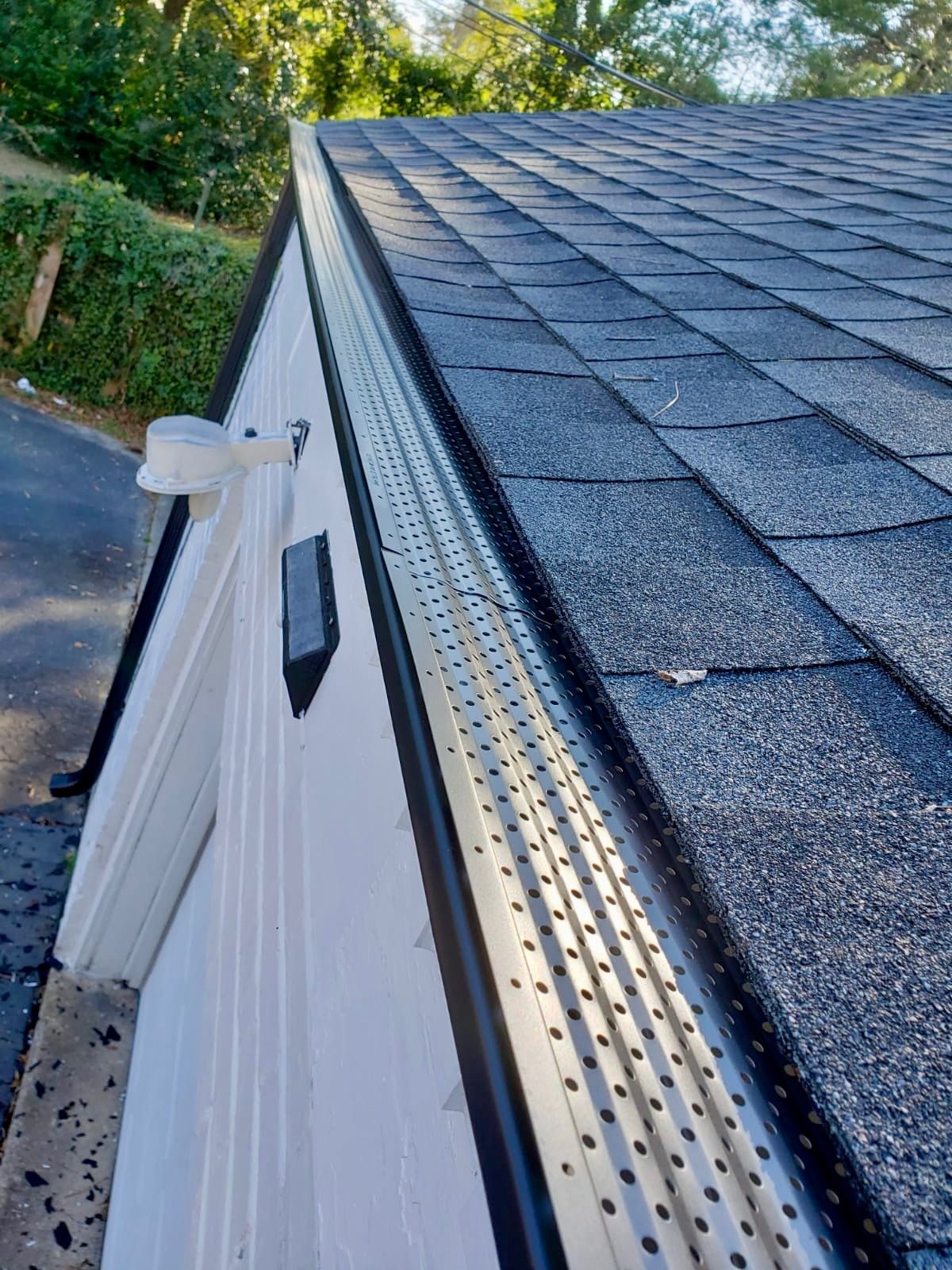
Peak Roofing Solution LLC installs and replaces gutter systems designed to direct water away from your home's foundation, siding, and roofing. When gutters fail or are missing, rainwater cascades off the roof edge and collects against the foundation, creating soil erosion and basement moisture problems. Properly installed gutter systems channel thousands of gallons of water each year to safe discharge points away from the structure.
Gutter installation involves mounting a continuous trough along the roof edge that captures runoff and feeds it through downspouts positioned to prevent pooling near the foundation. The system requires precise slope calculation—too flat and water sits in the channel breeding mosquitoes and algae, too steep and the flow overwhelms the downspout capacity during heavy rain. Material selection affects longevity, with aluminum resisting rust while vinyl can crack during freeze-thaw cycles common in North Carolina winters.
Schedule a property evaluation to identify drainage concerns and determine gutter system requirements for your home.
How Gutter Systems Prevent Long-Term Structural Damage
A functioning gutter system changes where water goes after hitting your roof. During a typical afternoon thunderstorm in Clayton, a 1,500 square foot roof sheds approximately 1,000 gallons of water in an hour. Without gutters, that volume falls directly along the foundation perimeter, saturating the soil and creating hydrostatic pressure against basement walls. Gutters redirect this flow through controlled outlets, keeping foundation walls dry and preventing the soil erosion that leads to uneven settling and cracked slabs.
After installation, you notice water no longer runs off the roof in sheets during rain, and the soil around your foundation stays firm rather than turning muddy. Siding remains cleaner because splash-back from ground impact stops hitting the lower courses. Peak Roofing Solution LLC often pairs gutter work with roofing replacement projects, since both systems depend on each other—damaged roof edges compromise gutter attachment points, while missing gutters accelerate fascia rot that undermines shingle edges.
Gutter systems require periodic maintenance to function correctly. Leaves and pine needles accumulate in the trough, especially during fall, and create blockages that cause overflow at the worst possible location—directly above the point where water would normally exit through the downspout. Some installations include gutter guards, which reduce but don't eliminate debris buildup. Downspout extensions determine whether water discharges far enough from the foundation to prevent the pooling the system was designed to stop.
What Homeowners Ask About Gutter Installation
Property owners in Clayton often have questions about gutter materials, installation timing, and maintenance requirements before committing to a new drainage system.
What material works best for gutters in North Carolina?
Aluminum gutters resist rust and handle the humidity and temperature swings common in the region, while remaining light enough to minimize stress on fascia boards during ice loading.
How do installers determine the correct slope for gutter sections?
Proper pitch requires a drop of one-quarter inch for every ten feet of gutter run, which allows water to flow toward downspouts without creating standing pools that overflow during heavy rain.
When should gutter replacement happen relative to roofing work?
Installing gutters after roof replacement prevents damage to new gutters during shingle tear-off and allows roofers to repair any fascia rot discovered when old gutters are removed.
What causes gutters to pull away from the house over time?
Fascia boards rot when water gets behind the gutter through gaps at the back edge, or hangers fail when spaced too far apart to handle the weight of water and debris during storms.
How far should downspouts discharge water from the foundation?
Extensions should carry water at least six feet from the foundation to prevent soil saturation in the zone where basement walls meet the footing.
Peak Roofing Solution LLC evaluates your roof edge, fascia condition, and yard grading to design a gutter system that addresses your specific drainage patterns. Request a detailed estimate to review material options and downspout placement for your property.